Showing posts with label Kicking Methods and Techniques. Show all posts

Friday, June 8, 2012

3 Ways to Improve your Roundkick

The roundhouse kick is the basis of most kicking arts


Number One: Hold Your Kick


Holding your kick is a very important aspect in building strength in the muscles required to kick effectively.  You should at least be able to hold a steady position on one leg, with the other raised in the air. The next step should be to chamber the kick and hold the chambered position for at least 30 seconds After having mastered that, practices holding out the leg extended in the manner you would strike an opponent for at least 10 seconds. The final step is to be able to perform the entire kicking motion in complete fluidity over a period of at least 15 seconds.


Number Two: Keep Your Back Straight

Too many newcomers to kicking arts tend to hunch over as they kick. This gives the illusion of being able to generate more power, just as winding up a punch makes your cross or hook feel stronger. In reality, hunching over and winding up completely telegraphs your motions to your opponent. You should be able to kick quickly and without warning from a standing position. Keeping your back straight and your center of gravity directly below you also gives you a better range, as well as making it easier to retreat in case your opponent evades the attack. However, avoiding leaning back, as this exposes the chin.


A straight back also allows you to keep a better defense, by protecting your head with your arms, as well as allowing you to clearly see your opponent.


Number Three: Drop Your Kicks

Now that you can hold your kicks, it will be almost counter-intuitive to drop them as fast as possible. While practicing slow kicks may have increased your technique and power, it also leaves your kick vulnerable to grabs and takedowns. Practice your kicks as you usually would, but now drop them to the ground as fast as possible after hitting the target. Initially stomp them down right next to the target, but slowly begin to attempt to drop them closer to their original starting position. This may sound easy, but it is incredibly difficult if done with a straight back and proper technique, as well as speed. This is best combined with speed training.


Good luck training!

Monday, January 16, 2012

The Roundkick: The Bread and Butter of Kicking

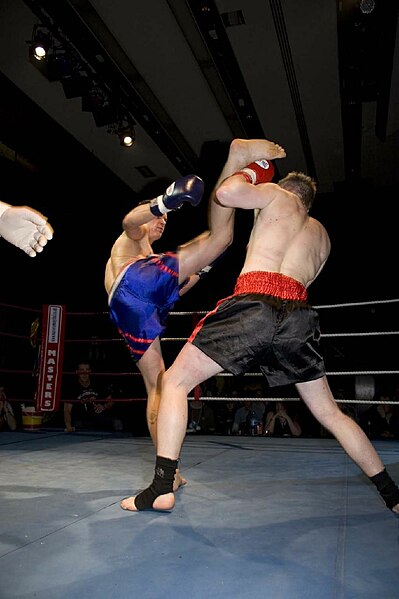
 The roundkick, also known as the wheel kick or roundhouse, is an important kick that builds the basis of any kicking martial art.


         The roundkick is useful for striking  practically any part of the body with high speed and power.
         The roundkick should strike with either the shin, the instep, or the ball of the foot.


THE SHIN:
This is mostly seen in Muay Thai. The shin offers a very hard impact surface, resulting in less pain to the thrower of the kick and more damage to the target. When executed in this manner, the kick comes straight from the ground towards the target in a line with a slightly curved trajectory. The entire body weight is often thrown behind this kick.

THE INSTEP:
Seen in most kicking arts, the instep offers greater range and precision than the shin. However, without padding, a roundkick thrown with the instep can result in pain and broken bones if applied to the opponents elbow, shin, or forehead without padding.
THE BALL OF THE FOOT:
This is a very rare method of kicking seen in some forms of karate. The ball of the foot is less fragile than the instep, while still not as strong as the shin. This method allows for the range given by an instep roundkick, but with the impact concentrated in a smaller area. However, this kick can be injurious if the toes are not pulled back correctly.

In this depiction, one can see how the toes are pull back and above, rather than pointing.


Sunday, January 15, 2012

Head Kicks vs Body Kicks: Playing it Safe


           Taekwondo lays a massive emphasis on kicks that are fast, long reaching, and high. In WTF sanctioned competitions, kicking to the head is rewarded with more points, not to mention that the judges will probably score your kicks more often after seeing you are capable of dealing damage and not a pushover.

As flashy and cool as these kicks may seem, sometimes good old fashioned body kicks will get the job done better and land points far more consistently.

Which ones should you use? Both, if possible. However, a Taekwondo fighter should mix and match the ratio of high kicks to body kicks in a manner that suits their needs and the current situation at hand.

Here is a short list comparing the two methods:

Head Kicks
Pros:
  • More points- Headkicks will always receive more points than a standard kick to the ribs or the chest. 
  • Knockout- The possibility of a knockout is comparatively FAR higher than powerful body shots.
  • Intimidation- Facing an opponent who regularly throws high kicks can be daunting, especially to inexperienced fighters. This applies to sparring as well as a possible scenario on the streets.
  • Diversification- Tossing just body kicks will result in your combinations becoming predictable. Headkicks will cause your opponent to think more and worry about what your next move is.
Cons:
  • Balance issues- Without proper training, a beginner will have problems maintaining balance during a high kick, let alone returning to a proper fighting position afterwards. 
  • Vulnerability- While in the middle of a high kick, you have little to no options when it comes to protecting yourself. Your supporting leg is wide open to unintentional (or intentional) low kicks. Your head may come closer to the ground, allowing kicks aimed at the body to hit you in the head. 

Body Kicks
Pros:

  •   Consistency- Landing body shots to the chest protector is far more common than landing head shots. On average, you should be able to score more points using this method.  
  • Speed- The foot with which you were kicking can quickly be dropped right next to your opponent in order to fire another kick in rapid succession.
  • Solid base- Your foot remains closer to your center of gravity for the majority of the kicking process, especially the chambering sequence.  This means you can pull your foot back faster if something goes wrong.
 Cons:

  • Predictability- Throwing almost 100% body kicks will result in an opponent that will know where to protect themselves, as they will not have to worry about their head.
  • Little Chance of Knockout- This is self-explanatory. Incredibly powerful blows will be needed to achieve a TKO through the sparring chest protector.


I personally use a ratio of about 3/4 body kicks to 1/4 high kicks, not including when I see an opening for a headkick by chance that I can exploit.

The Front Kick Dilemma


         The front kick is undoubtedly one of the most practiced Taekwondo kicks in existence. Countless hours are spent as a white belt practicing the same kick over and over. However, when watching sparring matches, one notices that this kick is practically nonexistent in sparring. What were those hours of practice put in for? Breaking a few flimsy plywood boards? A few flashy jump kicks in forms or demonstrations?                                                                                                                                            
The problem lies not in the front kick, but rather how it is taught and practiced. In most Taekwondo schools, the front kick is taught by kicking the air or by striking a kicking paddle (porkchop) held parallel to the ground. When one asks where this kick should land, the most common answer tends to be the chin. That is good and well, until one considers how many practitioners are taught to kick with the instep of the foot. Let me repeat that: The objective is to kick with the instep of the foot to the chin.                                               

 This is a horrible idea.
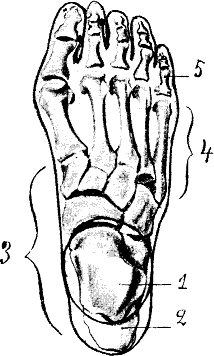
The area behind the toes and in front of the joint where the foot connects to the shin is commonly known as the instep (Look to the area marked with a #4 on this picture. Then go towards the center of the foot. That is the instep)


The instep of your foot is similar in structure to the area of your hand between the knuckles you punch with and your wrist. Feel this part of the back of your hand. Notice the large amounts of thin bone structures (the metacarpus). These bones are susceptible to breaking if you are not careful. While this area can definitely be used for striking, it is best suited for attacking the softer and meatier parts of the human body. Experienced kickers could theoretically hit harder parts of the body due to their bones adapting to kicking impact over time, but a Taekwondo rookie will end up with broken bones at worst or at least massive painful bruising.      

Then how should one go about using the front kick? Very simple.  
PULL YOUR TOES BACK.


Avoid hitting with the upper part of your foot. Pull your toes back and hit with the "ball" of the foot. Your kick should resemble something similar to a snapping push kick. This kick not only reduces the risk of damage to the top of your foot, but concentrates the force of your kick into a much smaller area. However, as injury is a risk inherent to all sport forms, you may jam a toe if you do not throw the kick properly.

This kick, although hardly ever witnessed in Taekwondo, is gaining popularity in MMA matches and has been a staple in kickboxing and karate tournaments for years. This method of kicking allows for targeted shots to the liver, solar plexus, and gut.                                                                                                   


The Taekwondo Sidekick


 The Taekwondo sidekick is among the most useful kicks in any situation. It is an excellent defensive kick and a devastating offensive kick. The sidekick was often demonstrated by Bruce Lee, who showed the true power a person could generate from this simple looking thrust of the leg.


Defensive Capabilities and Uses

1.    A Counter to "Bum-Rushing"- This is the most commonly taught application of the sidekick. An inexperienced, reckless, or substance-impaired fighter will often charge directly at the target at full sprinting speed. To reach full sprinting speed, both knees have to face the target and usually the arms will be pumping up and down to reach a higher momentum.  
                                                   Why is this important?
     If both knees are facing you, 90% of the time, it means that their chest is, too. The chest provides a large, open target with numerous weak spots, especially the solar plexus. This is partially why most martial arts take up a stance in which the chest is facing away at an angle, or can be moved to an angle to avoid direct blows. If the arms are pumping up and down, your opponent is not protecting his chest or his face, but the up and down motion of his elbows will be guarding the ribs, putting a roundkick out of the question.  A sidekick to the unprotected chest will not only potentially knock the breath out of your opponent, but also create distance.  If you are heavier than your opponent, your kick will send them a few extra feet in the other direction. On the other side of the coin, if you weigh less, you will most likely move back a few feet, creating distance, while still having hit them with n effective and painful strike.


            The Flying or Jumping Variation of the Sidekick can be used offensively and defensively.

2. Counterfighting in Sparring

       In any form of sport, maintaining stability and balance is key. While we practice balance with one leg in the air in Taekwondo, some of this training can go out the window in a heated sparring session. Always maintain good balance in a sparring session...and exploit your opponent's lack of balance.One of the best times to catch your opponent off-balance is after a missed, full power kick. Usually, this kick will go too far over their body and they will land in a compromised position. The best time to strike is anywhere from when the kick misses you to right before they touch the ground.  
                                       How does this tie in to the sidekick?
      While seeing an opponent off balance might lead to the simple conclusion that one can simply shove them over, this is not allowed in most forms of sparring, regardless of the kind of martial art. Even if it were allowed, running up to shove your opponent is a dangerous and tactically unsound choice (as well as not being a nice thing to do in a friendly match). Moving in to shove your opponent results in you moving out of your fighting stance from which you can throw your arsenal of kicks and punches, while the opponent can still potentially turn into a spinning roundkick, backkick, hookkick, even a hook punch or backfist. This is where you can use the sidekick. A turned opponent exposes his ribs and upper leg. The head is also exposed, but is not generally in an ideal position for a sidekick. A low sidekick to the upper thigh will definitely slow down your opponent's kicks, footwork, and reduce their punching power(this is a kickboxing scenario). In a situation more oriented towards Olympic-style sparring, a sidekick to a partially turned opponent's ribs, especially lower ribs can:

A. Score points in a point sparring match
B. Cause large amounts of pain if applied to the floating ribs (not recommended for a sparring match)
C. Result in the same effect of shoving someone over, but from a distance and from the safety of your fighting stance (plus extra points for the knockdown!)

Stay tuned for a post detailing the many offensive uses of the sidekick!